
Lionel Rolfe Included Among Historical Figures of Santa Clarita

June 11, 1968 — Reporter Lionel Rolfe occupies the city desk at the offices of the Newhall Signal and Saugus Enterprise. From the Santa Clarita Valley Historical Society.
An unexpected find on the website of the Santa Clarita Valley Historical Society are some rare photos and a biographical sketch of Lionel Rolfe. Here is a link to their entry:
https://scvhistory.com/scvhistory/sg19680611rolfe.htm
Lionel, who died in November 2018, lived most of his life and pursued his journalism career in Los Angeles, except for a short stint in San Francisco, where he worked on the San Francisco Chronicle. So it might seem odd that he is regarded as a figure of historical interest in Santa Clarita.
Lionel got his first newspaper job in the early 1960s with the Pismo Beach Times in San Luis Obispo County. He covered a lengthy fight in the local school board where the John Birch Society was working to defeat an attempt by the teachers to unionize. The head of the school board blamed Lionel for the turmoil, declaring he was a communist agent trained in Moscow and Peking to stir up trouble in American school districts. Lionel was fired.
He was blacklisted for years, getting back in the newspaper business only in 1968. He had become friends with Scott Newhall, executive editor of the San Francisco Chronicle. Newhall was a native of San Francisco, but his great grandfather was the land baron Henry Mayo Newhall, for whom the small town of Newhall, just north of Los Angeles, was named. In 1963 Scott Newhall bought the local newspaper, the Newhall Signal and Saugus Enterprise. He hired Lionel as a reporter. Newhall soon brought Lionel up to San Francisco to work on the Chronicle, where he stayed until 1971, when he returned to Los Angeles to take a job at the counter-cultural Los Angeles Weekly.
In 1987, Newhall, Saugus, and several other small towns were incorporated into Santa Clarita. The local paper changed its name to the Santa Clarita Valley Signal. So Newhall, its newspaper, and the paper’s staff were absorbed into Santa Clarita’s history. The entry on Lionel on the Santa Clarita Valley Historical Society website contains four photos of Lionel from 1968, one of which is reproduced above. The text explains that reporters when they returned from an assignment would use of any leftover space on the film in their cameras by taking pictures of other staff members. The four contemporary shots of Lionel are from old negatives in the files of the Santa Clarita Valley Signal. The photographer is given as Cheryl (?) Riley.
The Historical Society entry on Lionel also contains a copy of the biographical essay, The Life and Times of Lionel Menuhin Rolfe, by Linda Laroche, which was first published in the Pasadena Weekly, November 21, 2018.
Literary LA Cabaret: Honoring the Life and Work of Lionel Rolfe: Sunday, December 8, 2019, 7:30 to 9:00 pm, 681 Venice Blvd., Venice, CA
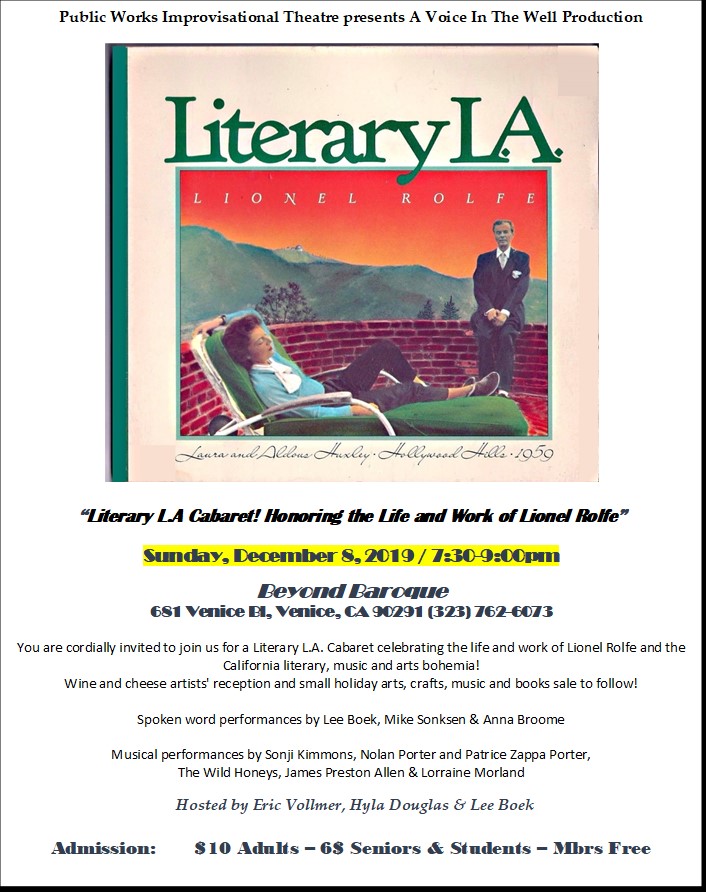
Literary L.A. Cabaret
Sunday, Dec 8th 7:30 to 9 pm (with reception to follow to 10 pm)
Beyond Baroque, Venice, California
artists’ links
Spoken word performances by
Lee Boek
https://www.facebook.com/PWImprovT/
Mike Sonksen (aka Mike the Poet)
Anna Broome
https://www.facebook.com/TheAnnaBroomeRoom/
Musical performances by
Sonji Kimmons
Nolan Porter and Patrice Zappa Porter
https://www.youtube.com/watch?v=b8H_-c73LxU
The Wild Honeys
James Preston Allen
https://www.facebook.com/james.p.allen.12
Lorraine Morland
The Future of Boryanabooks
With the death of Lionel Rolfe, the founder of Boryanabooks, on November 6, both the book publishing section and the monthly blog posting are currently on hold. The posts today, January 1, 2019, are the last. The website will stay up at least through early August 2020, so the years of existing posts will stay accessible. Boryanabooks, both the book publishing and website, are now the property of Lionel’s daughter, Hyla Douglas. She has not solidified any plans at this time for the future of the project.
Boryanabooks was created in 2009. Over those nine years it produced 14 books, all of them in ebook Kindle format, and most of them also in paper, through Amazon’s CreateSpace publishing service.
For this month for our last set of posts we are offering four chapters from Lionel Rolfe’s books. Novelist Umberto Tosi writes about his decades long friendship with Lionel. There are tributes by Linda Laroche from the Pasadena Weekly and from Mike Sonksen from the Cultural Weekly. There is also a last Honey column in our Notes from Above Ground section, this time on the road to San Francisco traced by early Spanish explorers. Honey van Blossom is the pen name of California Bay Area attorney Phyl van Ammers. And we have one more short piece by the late Katherine Hisako Glascock.
The Last Bohemian: Lionel Rolfe
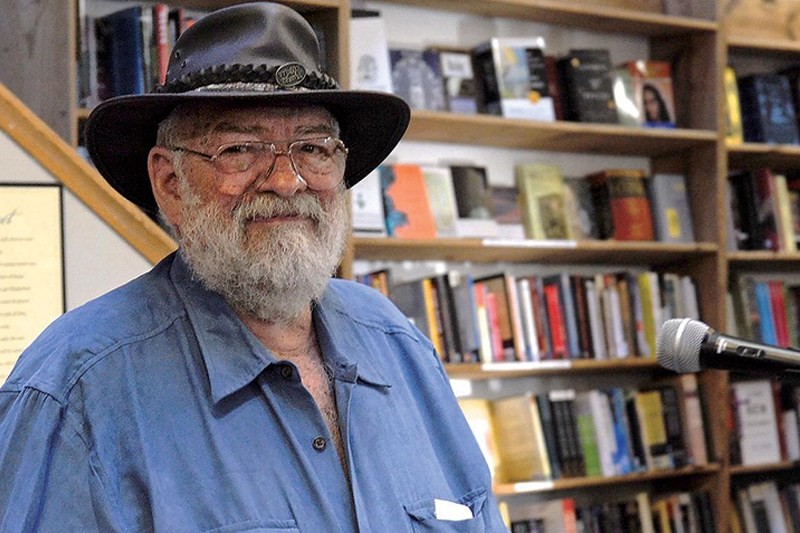
Photos by Bonnie Perkinson.
Former Herald Examiner columnist and longtime literary Los Angeles chronicler Lionel Rolfe died in his sleep of a heart attack on November 6thin Glendale at the age of 76. Beginning his freelance journalism career at 16, Rolfe wrote 9 books and lived almost all his life in California. His best-known book, Literary L.A, first published in 1981 by Chronicle Books, is a pioneering work covering a century of Los Angeles literature. Rolfe’s tireless work on the history of LA writers foreshadowed the explosion of studies on Los Angeles literature years ahead of the curve.
Rolfe became immersed in the Los Angeles cultural community while at Los Angeles City College in the 1960s. A devoted denizen of long-gone 1960s coffeehouses like Pogo’s Swamp, Rolfe wrote columns for the Los Angeles Free Press and was later blacklisted for his work with the Communist Party. Read more
Notes From the Underground of Lionel Menhuin Rolfe by Novelist Umberto Tosi
Umberto Tosi
[Novelist Umberto Tosi was contributing writer to Forbes, covering the Silicon Valley 1995-2004. Prior to that, he was an editor and staff writer for the Los Angeles Times and its Sunday magazine. He was also the editor of San Francisco Magazine. He published one of his novels, Our Own Kind, serially at Boryanabooks.com. They became friends while working at the Los Angeles Times in the early 1970s.]
* * *
by Umberto Tosi
Here we are again, down to the last page of another year’s calendar. Time to celebrate the holidays – and think about what I’ve done, if anything, to make my 2018 worthwhile.
I know. It’s been a long while since we relied on actual calendars – although I love them. Like maps, they’ve been swallowed up by our smartphones. But whether marked on 4-color glossy paper or digital screens, it’s still a long way from May to December, as the Noel Coward song goes.
The chill rainy dawning of this December strikes me as particularly poignant given the recent death of a long-time friend and esteemed colleague, Lionel Menuhin Rolfe, He passed away on November 6 in a Glendale, California medical facility, at age 76, of a heart attack after many months of complications from diabetes, a stroke and painful infections following a fall.
Lionel was prolific author, essayist, raconteur, outspoken leftist, cultural commentator, Jewish contrarian and historian, media gadfly and chronicler of all things California, especially sprawling anomalies and the creative life of Los Angeles. And what else? So many things, but mainly and always one thing – a writer: Actually, he was a writers’ writer. Read more
THE LIFE AND TIMES OF LONGTIME LA JOURNALIST AND AUTHOR LIONEL MENUHIN ROLFE
Linda Laroche
In the span of five decades, veteran Los Angeles journalist Lionel Rolfe wrote thousands of news stories and features, covering police, politics, arts and culture for daily, weekly and later online publications. Also during that time, Rolfe authored a dozen books, one titled “Fat Man on the Left,” a self-deprecating description of his own physical appearance and political leanings.
Perhaps best known recently in local journalism circles for his work with City News Service (CNS), Huffington Post, Random Lengths and the Pasadena Weekly, Rolfe had been in poor health over the past three years. He died in his sleep on Nov. 6 of an apparent heart attack at a Glendale medical facility, said his daughter, Hyla Douglas. He was 76. Read more
Death in the Desert
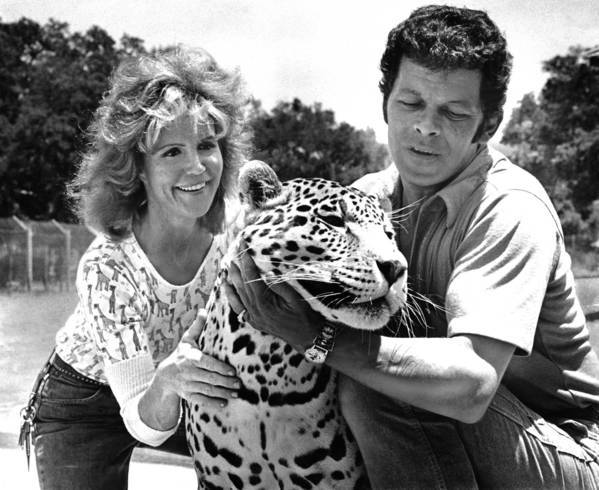
Ted and Pat Derby with their jaguar Clyde in 1973.
Lionel Rolfe
[This piece is from Lionel’s Fat Man on the Left: Four Decades in the Underground (1998). Most of it concerns the shooting death of famous wild animal trainer Ted Derby in Sand Canyon, near Tehachapi on April 14, 1976. Lionel with his then-wife Nigey Lennon covered this story for the Los Angeles Times. Lionel had met Ted Derby and his wife Pat Derby, also a well-known wild animal trainer, when Lionel was working as a reporter for the Newhall Signal, in 1968. In addition to this essay he wrote a long piece about a visit to Pat Derby and her partner Ed Stewart in 2010 at their home in San Andreas, California. The pair had founded the Performing Animal Welfare Society, which operates three sanctuaries for abandoned or abused animals, including elephants, lions, and tigers. Pat died in 2013.]
* * *
When my dog Rosie died, she died an enigma. She was a loyal protector. She saved my wife’s life early one morning when her old car broke down on a darkened side street, and an angry-looking drunk waving a large crescent wrench approached her, muttering angrily. But he stopped when he saw Rosie. Rosie, who was normally a very gentle dog, rose up on her hind legs and growled and carried on so much that the man dropped his wrench and ran. Rosie was a formidable-looking dog, with shepherd, collie and coyote in her. On another occasion, when a large, menacing man drinking from a jug of wine began threatening Nigey and me on a walk up past the Griffith Park Observatory, Rosie saved both of our lives. Again, the man took one look at Rosie and backed off. Rosie had a lot more of the wild beast in her than a domesticated dog normally had. Her genes included not just those bred from wolves centuries before, but those of an active and perhaps dominant coyote.
Rosie had attached herself to us 11 years before in Griffith Park. She was then a pitiful-looking pup, born of a union between a coyote and a domesticated dog, having a tough time surviving in the “wilds” of Griffith Park, which is one of the world’s greatest urban wildernesses. Read more
My Link to the Menuhin Odyssey
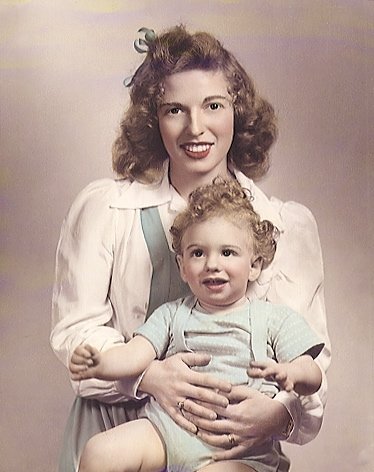
Lionel with his mother, pianist Yaltah Menuhin.
[This is a chapter from Lionel’s The Menuhins: A Family Odyssey (1978, Panjandrum; 2014, Boryanabooks).]
BY A TWIST OF FATE that to this day I am not entirely comfortable with, I was born into one of the great families in the history of world music—the Menuhins. My mother, Yaltah Menuhin, is the youngest sister of the great violinist, Yehudi Menuhin. Were it not for the fame of Yehudi, the Menuhin name might not have attracted your attention. My mother and her sister Hephzibah were both prodigy pianists. But Yehudi’s fame towers over that of his sisters, and indeed, over nearly every violinist there is or has been. There is controversy, to be sure, about whether his playing has matured as he has grown older; but still, Yehudi is a star among stars.
With such a luminary in my immediate family, you can see why this book would have to be, in part, an examination of my own feelings while growing up within the Menuhin tribe. But the following pages have more to do with my mother, Yaltah, and my uncle Yehudi and aunt Hephzibah, and my grandparents Moshe and Marutha Menuhin-with their feelings, thoughts and ideas as I have heard and remembered them through the years, and particularly in conversations and “interviews” held primarily to compile material for this book. As a writer I have turned the stage over to them, which is as such a book should be-more a family memoir or odyssey than a biography per se. But I have reserved the right to comment where it seems to be needed. Whatever foibles or peculiarities of theirs I have recorded, I nevertheless respect the issues around which their lives are lived with deep commitment. World peace and music are equally important to my family, and a deep concern with the meaning of life moves in each one of them. Read more
Aldous Huxley’s Strange Passage to the West
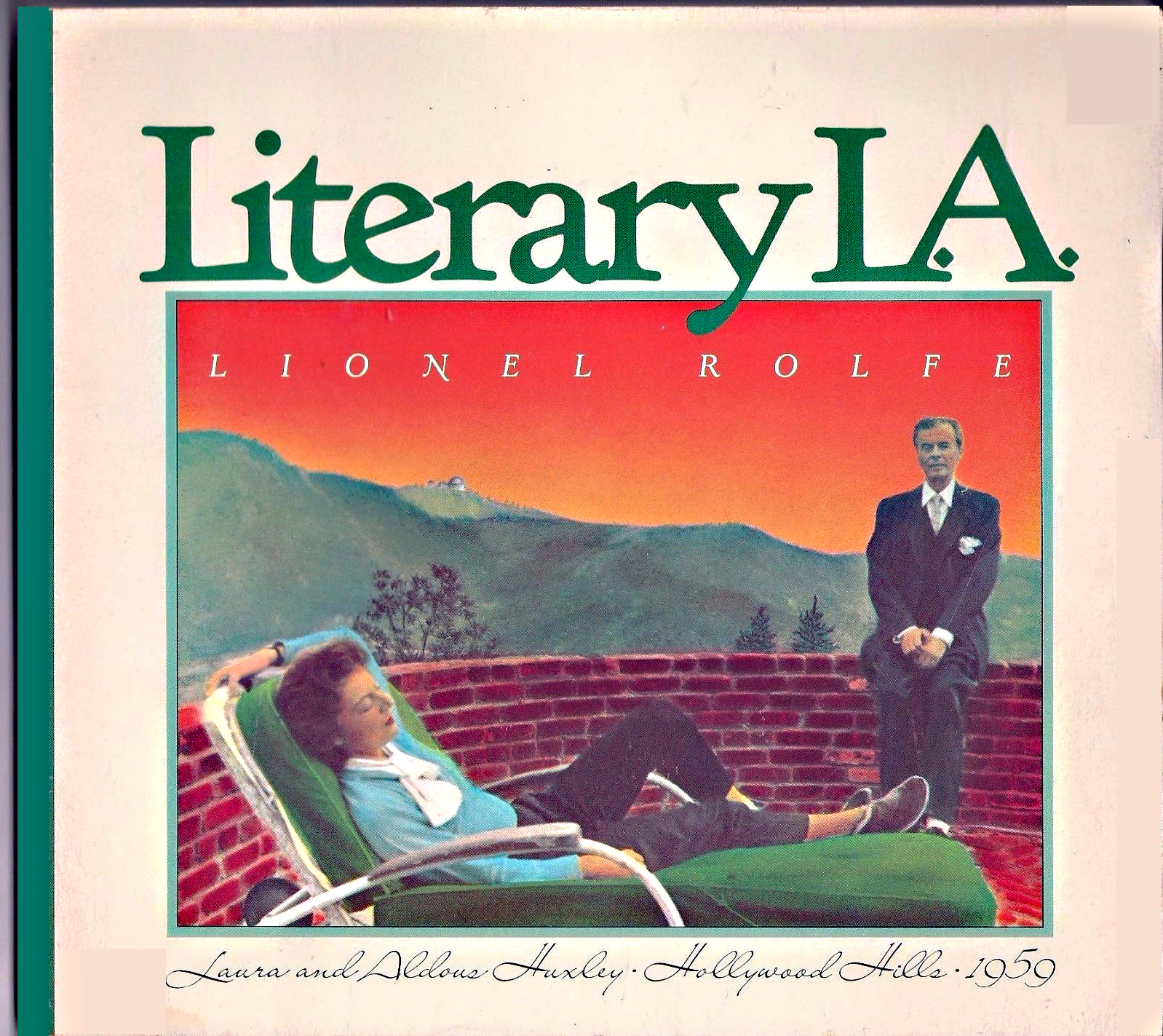
First edition of Literary L.A., 1981.
[From the first edition of Lionel’s Literary L.A. (Chronicle Books, 1981).]
ONCE WHEN A reporter asked Aldous Huxley why he had lived the last third of his life in the Los Angeles area, the famous English writer replied he had merely stopped here on his way to India and ended up staying because of “inertia and apathy.”
Whatever the reason, I counted myself lucky to be an L.A. resident the day I shook hands with the great man not too long before Huxley’s death in November of 1963. On that same occasion I also met Laura Archera, Huxley’s second wife, not supposing that nearly two decades later, she would again cause me to remember and contemplate the ghost of that tall willowy man.
On the second occasion when I met her, I had been instructed by my Uncle Yehudi to “put myself in the good hands of Laura Huxley.” Yehudi played the Bach Chaconne at the December 17,1963, memorial gathering for Aldous in London. Yehudi had been very close to both Aldous and Laura, and it was because of Yehudi that I had gotten to shake Huxley’s hand. Read more
The Grand Old Man of L.A. Letters
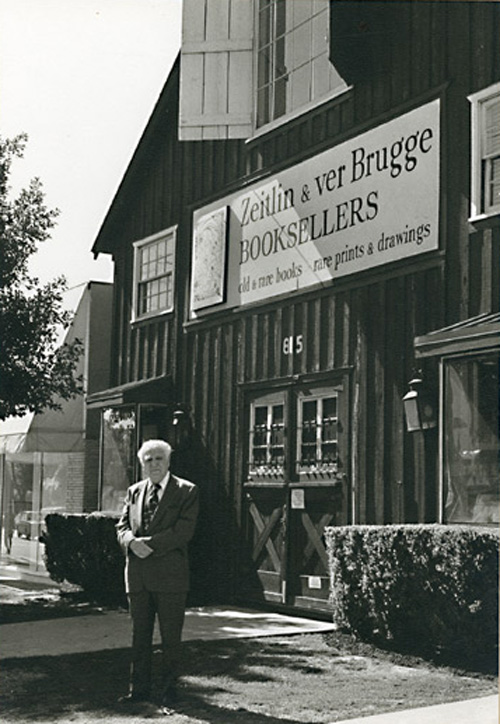
Jacob Zeitlin, photo by Amanda Blanco, 1978.
[This essay on antiquarian bookdealer and scholar Jacob Zeitlin (1902-1987) is from the second edition of Lionel Rolfe’s Literary L.A. (California Classics, 2002).]
Lionel Rolfe
THE GRAND OLD man of Los Angeles letters, Jake Zeitlin, invited me to lunch after reading my original Literary LA. When I showed the invitation to my librarian friend John Ahouse, he commented I might want to hang on to it because a handwritten letter from Jake Zeitlin was a treasure in itself. I figured if a letter from the man was worth something, a lunch with him could be worth even more.
Jake has been gone from this earth for a while now, but when he was alive, I often found myself driving past the striking red replica of a Pennsylvania Dutch barn on La Cienega, just below Santa Monica Boulevard. But until I went inside to meet Zeitlin, I had never been through the door of Zeitlin & Ver Brugge, dealers in rare books, manuscripts and letters. The stuff of history was stored in book shelves that climbed up to the second-story rafters of the building. It was also there in the lives of the man and woman who owned the barn. Josephine Zeitlin, whose maiden name was Ver Brugge, presided over the business office. Zeitlin, a stocky, handsome man even into his eighties, was the bookman incarnate. Read more
Honey on the road to San Francisco with some of the Spanish explorers
NOTES FROM ABOVE GROUND
By Honey van Blossom
 (Honey is a Belgian Marxist former strip-tease artiste)

"Cities of the Golden Gate," Raymond Dabb Yelland, 1893. Most illustrations can be enlarged by clicking on them.
Prologue to the story of the Spanish exploration and settlement of California
Seasonal migrations of animals now extinct in California probably created the roads the native people used before the Spanish land exploration of California. “The heyday of giant mammals in North America was the middle and late Pleistocene, an epoch that started 2.6 million years ago and ended 11,700 years ago, around the time the Earth was thawing out from the Ice Age. The gigantic beasts, which migrated from Asia across a now-vanished land bridge called Beringia, are known as Rancholabrean megafauna, after the famous La Brea tar pits in downtown Los Angeles — the graveyard of thousands of saber-toothed tigers, giant bison and other extinct animals.”[1]
The seasonal migrations of the large mammals may have created the substantial roads used by the indigenous people after their arrival.[2]
Paul S. Martin and Richard G. Klein argue that Paleoindian over-hunting led to the extinction of the megafauna.[3] Others argue that climate change was responsible for mammoth and mastodon extinctions. As the last major glaciation ended around 12,000 years ago, climate warmed too quickly for the megafauna to adapt.

