ABBEY ROAD:
Some Good Memories

By LIONEL ROLFE

The Abbey Road EMI Studio in London, no doubt the most famous recording studio in the world, has been in the news a lot recently, so I thought I would wait for a few weeks to pass so I could tell my memories of the place without the contamination of trendiness.

I spent some time at London’s legendary Abbey Road Studios in the early ‘70s because my uncle, violinist Yehudi Menuhin, also known in England as Lord Yehudi Menuhin, was recording there. I’m sure he had been making recordings there probably since the ‘30s. I think Yehudi by far had the biggest catalog in the EMI catalog, and many of them had been recorded there.

This time Yehudi was recording Bach with the Menuhin Players, his own chamber orchestra, composed of some of the best of of London’s musicians, including the late George Malcolm, the preeminent harpsichordist.

I’m sure for more of its history, mostly classical music had been recorded at EMI’s Abbey Road Studio. Classical musicians have a different attitude toward recording than popular music. I remember once when an engineer started telling my mom to do this and that as she was recording the Chopin Preludes, she said, “No, I make the music. You record it as well as you can. Period.” (more…)

Instead Of A Pretty Dancing Lady, Our Photog Could Only Find A Pretty Lady

img_0074

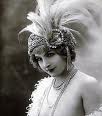
Our photographer couldn’t find any pretty dancing women, but he did manage to find someone very pretty. Her name is Rose, by the way.

Rare Recording: Yaltah Menuhin Plays Bach’s Chromatic Fantasy and Fugue

Child prodigy pianist Yaltah Menuhin was able to produce a peculiarly deep interpretation of Beethoven’s Waldstein (Piano Sonata No. 21 in C major, Op. 53) when she went to Australia in the early ’80s to memorialize her sister Hephzibah Menuhin (1920-1981), also a child prodigy pianist. Both sisters, but especially Hephzibah, had made recordings with their famous brother and violinist Yehudi Menuhin, widely regarded as the greatest child prodigy musician since Mozart. Yaltah’s son, author Lionel Rolfe, brought back the recording made in a Melbourne studio when he returned from his mother’s London flat where he went to settle her estate in 2001. Yaltah wanted to remember her sister with "Visions & Prophecies" by Ernst Bloch, Bach’s Chromatic Fantasy and Fugue, represented here, and Beethoven’s Waldstein, among others. As children the three Menuhin children had known Bloch as an adult they teased. He was sometimes a difficult man. But his music was sublime. Yaltah needed to play this music as beautifully as she could in Hephzibah’s memory. This was not her public performing. These were private performances, musical love-making of a kind she didn’t necessarily want to do publicly. This was intimate and private music-making. She kept the tapes in an honored place in her West Hamptead flat and never talked about releasing them.


Rare Recording: Yaltah Menuhin Plays Beethoven’s Waldenstein

Child prodigy pianist Yaltah Menuhin was able to produce a peculiarly deep interpretation of Beethoven’s Waldstein (Piano Sonata No. 21 in C major, Op. 53) when she went to Australia in the early ’80s to memorialize her sister Hephzibah Menuhin (1920-1981), also a child prodigy pianist. Both sisters, but especially Hephzibah, had made recordings with their famous brother and violinist Yehudi Menuhin, widely regarded as the greatest child prodigy musician since Mozart. Yaltah’s son, author Lionel Rolfe, brought back the recording made in a Melbourne studio when he returned from his mother’s London flat where he went to settle her estate in 2001. Yaltah wanted to remember her sister with "Visions & Prophecies" by Ernst Bloch, Bach’s Chromatic Fantasy and Fugue, and Beethoven’s Waldstein, among others. As children the three Menuhin children had known Bloch as an adult they teased. He was sometimes a difficult man. But his music was sublime. Yaltah needed to play this music as beautifully as she could in Hephzibah’s memory. This was not her public performing. These were private performances, musical love-making of a kind she didn’t necessarily want to do publicly. This was intimate and private music-making. She kept the tapes in an honored place in her West Hamptead flat and never talked about releasing them.

First Movement


Movements 2 and 3:


Rare Recording Found Of Yaltah Menuhin Playing Bloch’s “Visions and Prophecies”

Yaltah Menuhin, the prodigy pianist and sister of the violinist Yehudi Menuhin, the greatest musical prodigy since Mozart, made this private recording in Australia when she went for the memorial in the early ’80s for her sister Hephzibah, also a prodigy pianist. All three children knew Bloch well.

www.boryanabooks.com is run by Yaltah’s son, Lionel Rolfe, an author and journalist. Check our catalog for his book, “The Uncommon Friendship of Yaltah Menuhin and Willa Cather,” available at Amazon’s Kindlestore for iPads, iPhones, Kindles and desktop computers.

His first book, “The Menuhins: A Family Odyssey,” is also available digitally. Rolfe has written seven books, including those devoted to politics, literature and politics.

IMPORTANT MISCELLANY: Tales Of That Extraordinary Madman, Charles Bukowski

Full page fax print

BY LIONEL ROLFE

IN 1972, when I saw fellow Los Angeles Free Press writer Charles Bukowski’s book in the window of a bookstore in West Hampstead in London, my first reaction was one of jealousy The book was called Notes of a Dirty Old Man, the same title as his column in the paper. It was a City Lights book, with Bukowski’s amazing pocked alcoholic face adorning its cover. I viewed Bukowski as only doing a limited shtick—he rarely came into the office himself, but I knew all about him because my friend Judy Lewellen, the city editor, used to go pick up the column. I guess I hadn’t understood how popular Bukowski was getting until I was confronted by a book display in London. Years later, I came to realize that this guy had paid far more dues in his life than I had.

He was more than just a good offbeat columnist. Everyone knows about Bukowski, who for many years was able to walk the decaying, slummy streets of Los Angeles—as a mailman, a hobo, an alcoholic on Skid Row —while his writing was beginning to sell by the thousands—in Europe. He was especially popular in his native Germany. In the United States he was selling only in the hundreds. Bukowski was an ethnic Polish-German, but in the latter years of his life he did become famous in his hometown of Los Angeles. Even though the movie “Barfly” didn’t do well at the box office, it helped draw more attention Bukowski’s way. Mickey Rourke did a good job playing Bukowski, and Faye Dunaway was his girl. In an earlier movie, “Tales of Ordinary Madness,” Ben Gazzara also did a fine job of playing a slicked up Bukowski.

Let me tell you about the time I reconstructed Bukowski.

*

It was one of those rare moments when it really was impossible to figure out whether art imitates life, or life imitates art. The occasion was an informal, lightly-attended afternoon movie premiere of “Tales of Ordinary Madness” at a theater in West Los Angeles. “Tales” was an Italian-made film about a mad and drunken Los Angeles poet, based on various autobiographical short stories by Bukowski.

As the movie began, Ben Gazzara appeared on the screen taking a swig from a brown-bagged wine bottle. I turned around to see what the real Charles Bukowski thought of all this—he was sitting three or four rows back. He, too, was swigging away from a “freeway bag” full of wine in sync with the character on the screen. (more…)